

10 Signs Your Website Is a Liability (2026 Guide)
A website liability is a site that costs more in maintenance, lost leads, and reputational damage than it generates in value. If your site is slow, not mobile-optimized, or fails to rank on Google, it is actively hindering your business growth rather than serving as a digital asset.
Is Your Website a Liability or an Asset?
In the modern digital landscape, particularly within the competitive market of South Africa, your website is often the first and most significant touchpoint for potential customers. When we talk about a website being an "asset," we mean it is a tool that works for you 24/7—generating leads, closing sales, and building brand equity. However, many business owners are tethered to a digital presence that has transitioned from a helpful tool into a significant website liability .
A liability doesn't just mean it costs money to host. It means it is actively driving customers away to your competitors. Whether it is through a poor user experience, security vulnerabilities, or simply looking like it hasn't been updated since 2015, a failing website can be the silent killer of your digital transformation efforts. Understanding the signs of an outdated website is the first step toward reclaiming your online success.
1. Your Website Takes More Than 3 Seconds to Load
Speed is the currency of the modern web. If your site takes longer than three seconds to load, you are likely losing more than half of your potential traffic. Google’s algorithms prioritize user experience, and page load speed is a primary metric. A slow site is a classic website liability because it increases your bounce rate and signals to search engines that your site is not worth recommending.
In South Africa, where mobile data can be expensive and network speeds vary, having a lightweight, high-performance site is even more critical. If your current site is bloated with unoptimized images and old plugins, you are effectively paying to turn customers away.
2. Is Your Website Truly Mobile-Friendly?
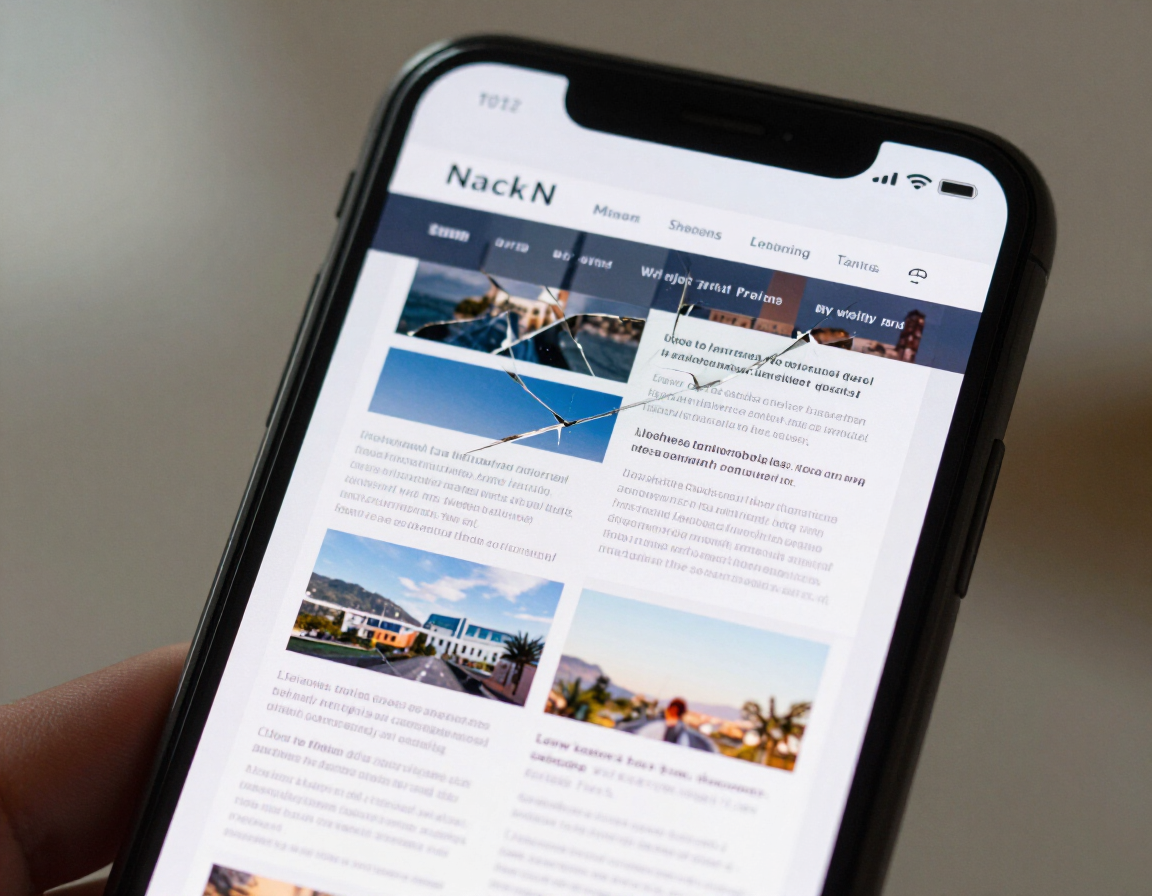
It is no longer enough for a website to just "work" on a phone; it must be designed with a mobile-first mentality. If a user has to pinch and zoom to read your text or find your Contact page, your site is a liability. Responsive web design ensures that your layout adapts seamlessly to any screen size, providing a consistent experience whether the user is on a desktop in Sandton or a smartphone in Cape Town.
Signs of mobile failure include:
- Overlapping text and images
- Buttons that are too small to tap
- Horizontal scrolling on mobile devices
- Slow-loading mobile elements
- Hidden navigation menus that are impossible to find
Why Are Your Conversion Rates Dropping?
A high-performing website should act as your best salesperson. If you are seeing plenty of traffic but zero inquiries or sales, there is a fundamental disconnect. This is often caused by a lack of clear Calls to Action (CTAs), confusing navigation, or a general lack of trust. When a website fails to convert, it becomes a sinkhole for your marketing budget.
3. Your Design Feels Like a Time Capsule
Design trends move fast. A website that looked cutting-edge five years ago might look ancient today. While you don't need to chase every fad, your design must reflect current standards of professionalism and usability. An outdated design suggests to the user that your business might also be outdated, or worse, that you are no longer in operation. This lack of visual credibility is a major website liability .
Modern digital assets use clean layouts, high-quality imagery, and intuitive typography. If your site is cluttered with animated GIFs from a decade ago or uses a color palette that makes eyes strain, it's time to look at a new way to own a website that keeps you current without the massive upfront fees.
4. Are You Hidden on Page 10 of Google Search?
If your business doesn't appear when people search for your services, your website is not doing its job. SEO is not a "set it and forget it" task; it requires ongoing technical maintenance and content strategy. Many old websites lack the underlying architecture—like schema markup and proper header hierarchies—to rank well in 2026.
Utilizing AI-powered SEO tech is now a standard requirement to keep up with the competition. If your current site doesn't allow for easy meta-tag updates or lacks a blog to host fresh content, you are missing out on organic growth. You can check our latest insights on the Blog to see how modern SEO works.
5. High Maintenance Costs and Agency Deadlocks
Are you paying thousands of Rands every month just for "support" that never seems to result in actual improvements? Or perhaps you are locked into a contract with an agency that takes three weeks to change a single sentence on your homepage. This financial and operational friction is a hallmark of a website liability .
The traditional model of paying R20,000 upfront plus heavy monthly retainers is becoming obsolete. Modern businesses are moving toward subscription-based models where hosting, support, and maintenance are bundled into a single, affordable monthly fee—no contracts, no hidden fees.
Is Your Website Secure and Compliant?
Security is non-negotiable. With the rise of data privacy regulations like POPIA in South Africa, a website that leaks data or lacks basic security features isn't just a liability—it's a legal risk.
6. The Dreaded "Not Secure" Warning
If users see a "Not Secure" warning in their browser bar when they visit your site, they will leave immediately. This usually means you lack a valid SSL certificate. Beyond the immediate loss of trust, Google actively penalizes sites without HTTPS. This is one of the easiest outdated website signs to spot and one of the most damaging to your reputation.
7. You Are Afraid to Touch Your Own Website
A website should be a living document. If you are terrified that clicking "Update" in your CMS will break the entire site, you are dealing with technical debt. Old WordPress installations with dozens of conflicting plugins are notorious for this. A modern asset should be built on a stable ecosystem that allows for easy updates without the fear of a total system crash.
8. Where Is Your Data and Analytics?
If you can’t tell how many people visited your site last week, where they came from, or which page they spent the most time on, you are flying blind. A website without integrated analytics is a missed opportunity for optimization. You cannot improve what you do not measure. A true digital asset provides you with actionable data that helps you make better business decisions.
Common data gaps include:
- No Google Analytics integration
- Lack of conversion tracking for forms
- No heatmaps to see user behavior
- Ignorance of which keywords drive traffic
- High bounce rates that go unanalyzed
How Can You Transform a Liability Into an Asset?
Transitioning from a failing site to a powerful digital tool doesn't have to be a painful or expensive process. By identifying these 10 signs, you’ve already taken the first step. The next is choosing a solution that grows with you.
9. Your Content is Stale and Irrelevant
If your last "News" post was from three years ago, or you are still advertising services you no longer offer, your website is actively lying to your customers. Stale content kills SEO and trust. A modern website makes it easy to add new pages, update pricing, and share your latest Peach Pin updates. If your current platform makes content management a chore, it’s a liability.
10. The User Journey Leads to a Dead End
Every visitor to your site should have a clear path to follow. Whether it's to "Buy Now," "Book a Consultation," or "Learn More," the journey must be frictionless. If your site is a maze of broken links and "404 Not Found" errors, you are effectively closing your doors on your customers. A professional site audit can reveal these hidden roadblocks.
Summary: Turning the Tide on Your Digital Presence
To move from a website liability to a high-performing asset, you must address speed, mobile responsiveness, and user trust. In 2026, the best way to do this is by adopting a flexible, subscription-based model that eliminates the risk of large upfront investments and technical obsolescence.
Key Takeaways to Evaluate Your Site:
- Speed Check: Does it load in under 3 seconds?
- Mobile Test: Is it easy to use on a smartphone without zooming?
- Trust Factors: Do you have an SSL certificate and modern design?
- Cost Analysis: Are you paying for value or just for "maintenance"?
- Conversion Focus: Is there a clear path for a customer to take action?
If your current website fails more than two of these checks, it is likely a liability. It’s time to stop settling for a site that holds you back and start investing in a platform that drives your business forward. You can even become a partner to help others make this transition.